I am passionate about making games that are interesting to play and feature interesting mechanics. I have created games and systems both within teams and by myself in a variety of different coding environments. Below is a showcase of some of my work.
Due to the nature of the industry, I have collaborated on multiple recent projects within Blowfish Studios which are currently under NDA.
Phantom Galaxies Mission Area
Phantom Galaxies is space based shooter that allows the player to switch between third-person mech shooting and starship dogfights with the press of a button. Within the game players have 6 degrees of freedom, in which they can move any direction with any rotation.
I was the Lead Level Designer within the production of this level. I greyboxed the environment, scripted the mission and gave the vision for the direction we wanted to take the environment. Throughout the level I used multiple techniques such as Weenies, LoS blockers and bread-crumming to guide the player between objectives and points-of-interest.
The level features over 1 million scripted events, including side-objectives and main line missions, to create a Helldivers-esque mission flow and layout. Enemies get harder as the mission progresses, different unique events can occur, and all of this mission can be done with 1-4 players in a single-player or multiplayer environment.
Sneaky Monsters
Sneaky Monsters is a fast-paced stealth game where you embody 1 of 3 unique monsters with different strengths and abilities to steal arms from the evil cyberpunk corporation.
This game was built for a 48-hour game jam hosted by UTS’s Playmakers Society. At the start of the 48 hours, the theme of Cyberpunk and Monsters was unveiled. The game was then brainstormed, designed, prototyped, iterated, and finally polished within the time frame.
The game is within the stealth genre with its main gameplay involving the dodging and planning around the enemies and their view cones. The game aims to make the player feel like a super spy and like they are outsmarting the AI. The singular level is made fresh by the unique abilities the 3 different monsters have which can be utilised.
Below the playable version of Sneaky Monsters is the Game Design Document (GDD). It features the main pillars, title information, gameplay overviews and highlights, and improvements that would have been included within the game if the timeline was longer.

Winner:
Best Overall Game
What’s Behind Doors?
‘What’s Behind Doors?’ is a narrative-based walking-sim that takes the player through the difficulties of creating a door for a video game.
This game was built for a 7-day game jam, Brackeys Game Jam 2024.1. The theme of “What’s Behind The Door?” was revealed at the start of the 7-day jam. The game was then brainstormed, designed, prototyped, iterated, and finally polished within the time frame.
The game is a parody game, using audio and player input to progress the game forward. It uses player understanding and concepts players are familiar with but twists them in a way to poke fun at the difficulties of creating a video game. The game was also heavily inspired by “The Door Problem” (https://lizengland.com/blog/2014/04/the-door-problem/).
Top 8%
Fun & Theme
North Pole Level Design
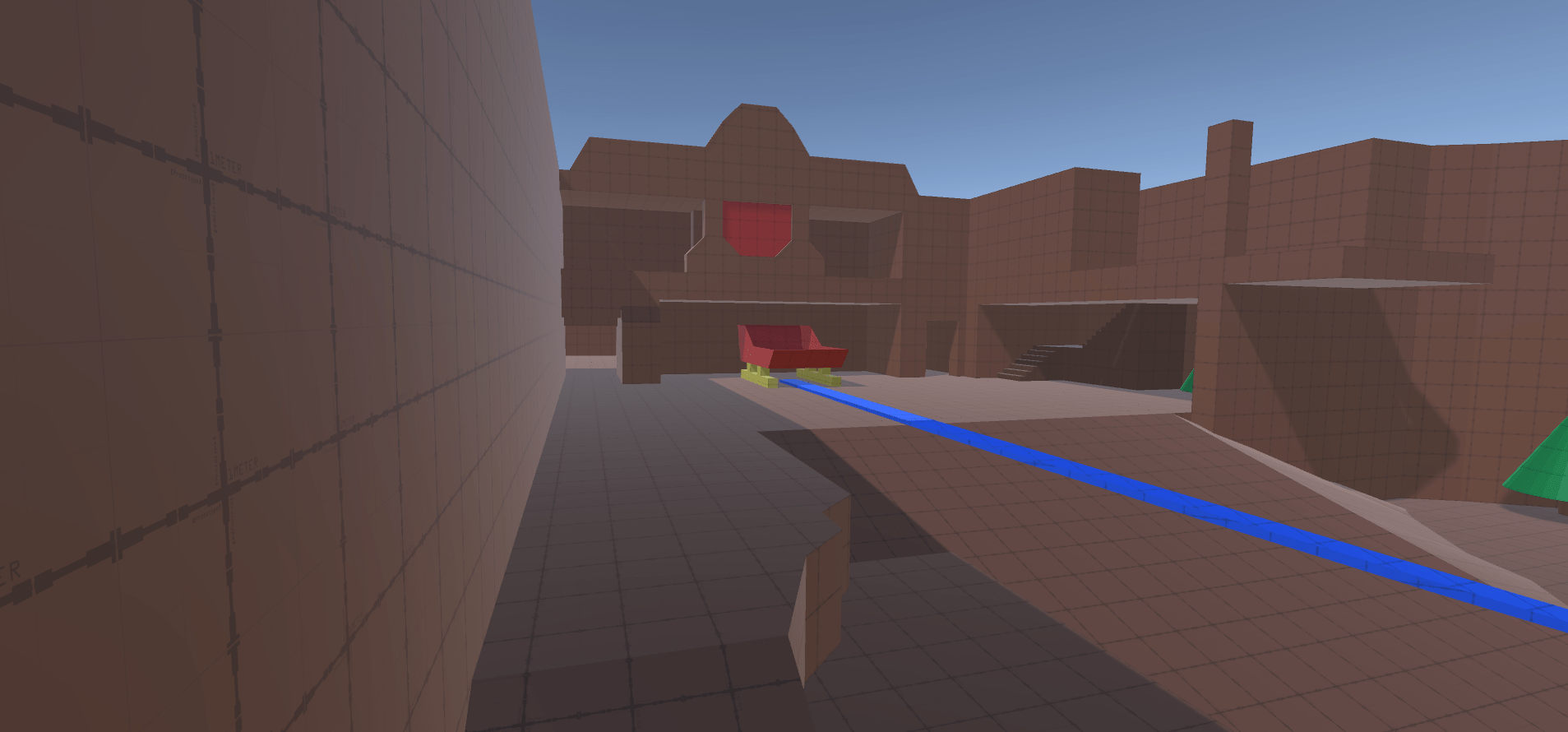
Every level should tell a story not only through cutscenes but also through gameplay. The level seen here is based on the North Pole and requires the attacking team to guide the sleigh to the end of the level where the sleigh is to take off. The defending team’s aim is to stop this from happening. The demo shown is the first section of a payload-type map for a hero shooter similar to Overwatch, with heroes based on holiday characters such as Santa and the Easter Bunny. The part of the level shown here is based on Santa’s workshop and includes the start of the level, the attacking team’s 1st spawn room, and the first checkpoint along the path of the sleigh.
This is a demo level that I am working on using the Unity engine and Pro-builder within Unity. The level was designed from the mind of a level designer, where boxing out areas and creating quick prototypes to playtest is the goal. If this was a real level, modelers and artists would then make the level look more interesting and add detail.
As seen below the level had some iterations. These iterations were made after testing the level out and finding flaws in the overall design of the level. The changes include; Changes to the spawn exits and sightlines to prevent easy spawn-camping, changes to the overall length of the level to allow for a second team-fight within this small area, limitations on longer sight-lines and an overall shrinking of the area on the map to make for more compact team fights.